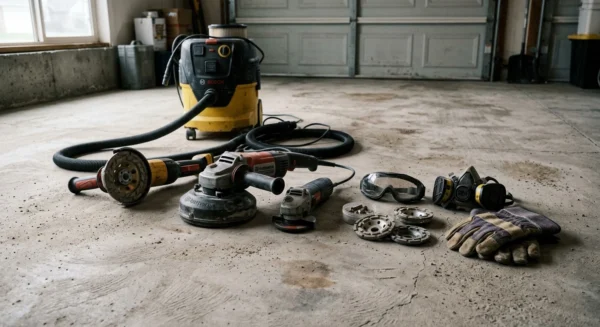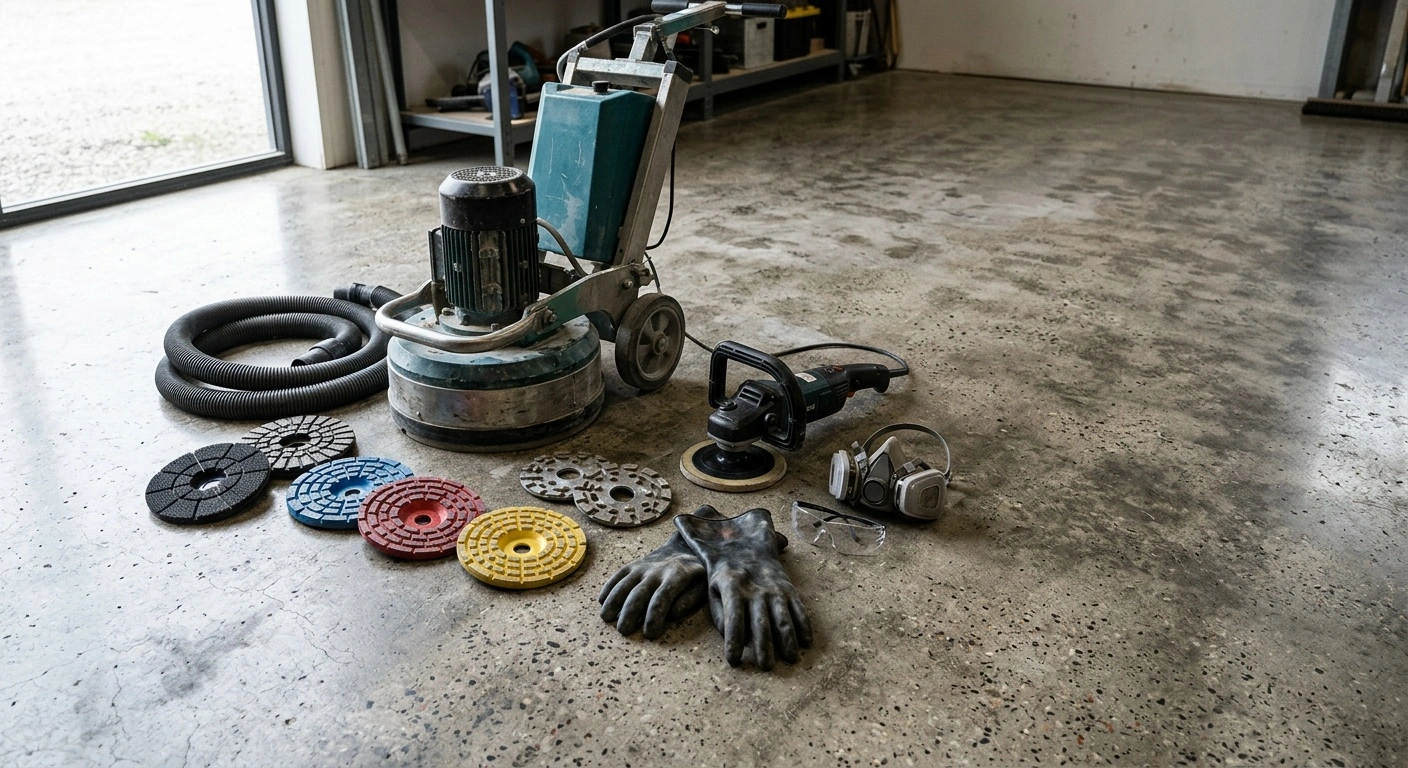
Concrete polishing tools determine how efficiently a crew can flatten, refine, and finish a concrete floor. The right setup also reduces scratches, controls dust, and produces a consistent sheen.
A complete polishing system includes more than a floor grinder. Crews also need diamond tooling, edge equipment, dust extraction, chemical treatments, and testing supplies. Each item supports a specific stage of the job.
Essential Concrete Polishing Tools
Tool selection starts with the slab. Hardness, surface condition, aggregate exposure, and the desired finish all affect the equipment and diamond bond you should use.
Planetary Floor Grinders
A planetary grinder handles most of the floor area. Its rotating heads cut in multiple directions, which helps produce an even scratch pattern.
Choose a machine with enough weight and power for the project size. Variable speed gives the operator more control during coating removal, grinding, honing, and final polishing.
Large machines cover open areas quickly. Compact grinders fit tighter spaces and place less demand on electrical service.
Diamond Grinding and Polishing Tooling
Metal-bond diamonds remove coatings, flatten high spots, and expose aggregate. Lower grit numbers cut more aggressively, while higher grits leave finer scratches.
The bond should match the slab rather than the desired gloss. Soft concrete usually needs a harder bond to limit diamond wear. Hard concrete often cuts better with a softer bond that exposes fresh diamond particles.
Transitional tooling bridges the gap between metal grinding and resin polishing. These copper, ceramic, or hybrid diamonds remove deep metal scratches before the resin steps begin.
Resin-bond pads refine the surface and develop clarity. Common sequences progress through 100, 200, 400, 800, 1,500, and 3,000 grit, although many floors stop earlier.
Edge Grinders and Handheld Tools
Full-size grinders cannot reach walls, columns, corners, or door frames. Edge grinders bring the same diamond process into those areas and help the perimeter match the main floor.
A variable-speed hand grinder handles corners and small repairs. Use a compatible dust shroud, and select cup wheels or polishing pads that match the floor sequence.
Edge work takes time.
Complete it alongside each main grinding stage instead of leaving every edge until the end. This approach makes scratch removal easier and reduces visible differences around the perimeter.
HEPA Dust Extractors
Dry grinding creates fine silica dust that requires effective capture at the source. Pair the grinder with a properly sized dust extractor and check the manufacturer’s airflow requirements.
A HEPA-filtered unit helps contain fine particles. Automatic filter cleaning can maintain suction during long grinding passes, while a pre-separator extends filter life.
Inspect hoses, cuffs, and shrouds before work begins. Air leaks reduce collection performance and allow dust to spread across the floor.
How to Choose the Right Diamond Sequence
Start by defining the finish. A cream finish removes little paste, while salt-and-pepper exposure reveals fine aggregate. Full aggregate exposure requires deeper grinding and more labor.
Next, test the concrete with a scratch kit or another accepted hardness test. Run a small sample area before committing to a diamond bond or full-floor sequence.
Do not advance until the current tool removes scratches from the previous step. Strong overhead light or a low-angle inspection lamp makes stray marks easier to find.
Each grit should create a uniform scratch pattern. Skipping stages may save time initially, but it often leaves deep scratches under the final polish.
Dry Versus Wet Polishing
Dry polishing offers clear surface visibility and straightforward waste handling when the extractor performs well. It also allows crews to move directly between passes without collecting slurry.
Wet polishing cools the diamonds and can help on certain hard slabs. However, crews must contain, collect, and dispose of slurry according to local rules.
Some contractors combine both methods. They grind wet during aggressive cutting, then switch to dry tooling for later polishing stages.
Chemicals and Application Equipment
Concrete Densifiers
Densifier reacts with available lime in the concrete and hardens the surface. Contractors commonly use lithium, sodium, or potassium silicate products.
Apply the product evenly with a low-pressure sprayer or microfiber applicator. Follow the manufacturer’s coverage rate and dwell-time instructions, since excess material can leave residue.
The application point depends on the system and slab condition. Many crews densify after initial grinding and before higher resin grits.
Stain Guards and Burnishers
A stain guard can improve resistance to oil, water, and common spills. Apply thin coats because heavy application may streak or create an artificial-looking film.
A high-speed burnisher heats and tightens the guard after application. Use the pad specified by the chemical manufacturer, and keep the machine moving to avoid swirl marks.
Testing and Inspection Equipment
A concrete moisture meter provides a quick surface assessment, but it does not replace deeper testing when the project specification requires it. Relative humidity probes offer more useful information about moisture inside the slab.
A gloss meter gives the crew an objective reading at defined stages. This helps confirm consistency across large floors and supports clear acceptance criteria.
Use strong, portable lighting throughout the process. Gloss alone can hide scratches, edge variation, and uneven aggregate exposure.
Safety Equipment for Concrete Polishing
Operators need eye protection, hearing protection, work gloves, and suitable footwear. Respiratory protection may also apply based on the task, exposure assessment, and dust-control plan.
Use ground-fault protection in damp conditions and inspect electrical cables before every shift. Secure loose cords and vacuum hoses so they do not cross active walkways.
Grinding equipment can move suddenly when a tool catches an edge or floor joint. Operators should keep both hands on the controls and start at the recommended speed.
Maintenance That Protects Tool Performance
Clean grinder heads and inspect tool holders after each shift. Worn retainers can allow segments to move, which creates an uneven cut and damages the holder.
Rotate diamond positions when the equipment manufacturer recommends it. This practice encourages even wear across the grinding head.
Empty dust containers before they overfill, and check filters regularly. Reduced suction affects air quality and leaves dust under the diamonds, where it can interfere with the finish.
Store resin pads flat and keep grit numbers separated. A single coarse pad mixed into a fine polishing step can scratch a large section of floor.
Building a Reliable Polishing Setup
The best equipment package matches the slab, electrical service, floor area, and specified finish. Buying the largest grinder or the longest diamond sequence does not guarantee better results.
Test first, document the successful process, and keep each pass consistent. Well-matched concrete polishing tools help crews produce an even floor without wasting diamonds, labor, or chemical products.