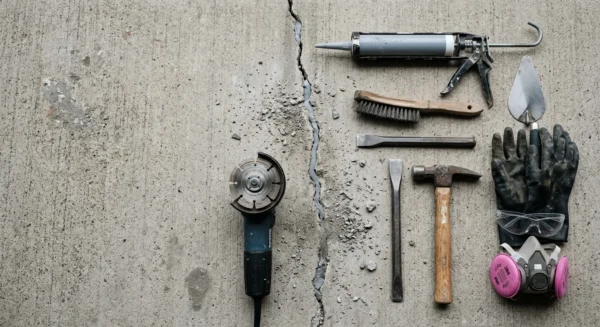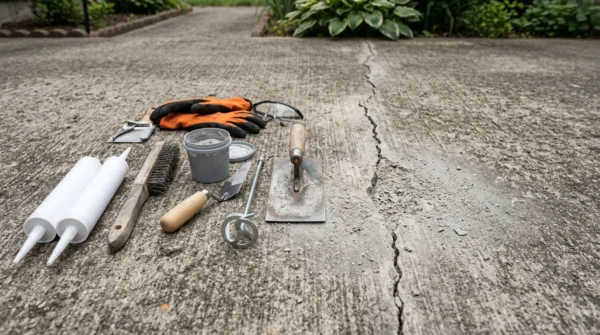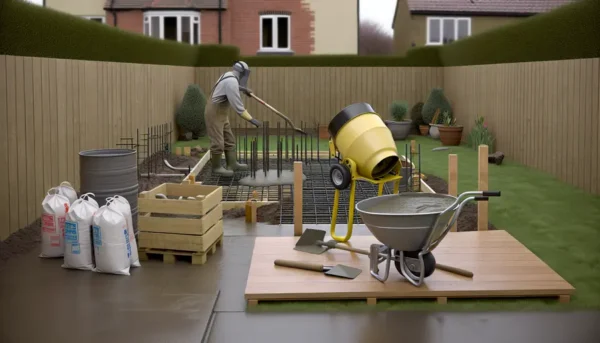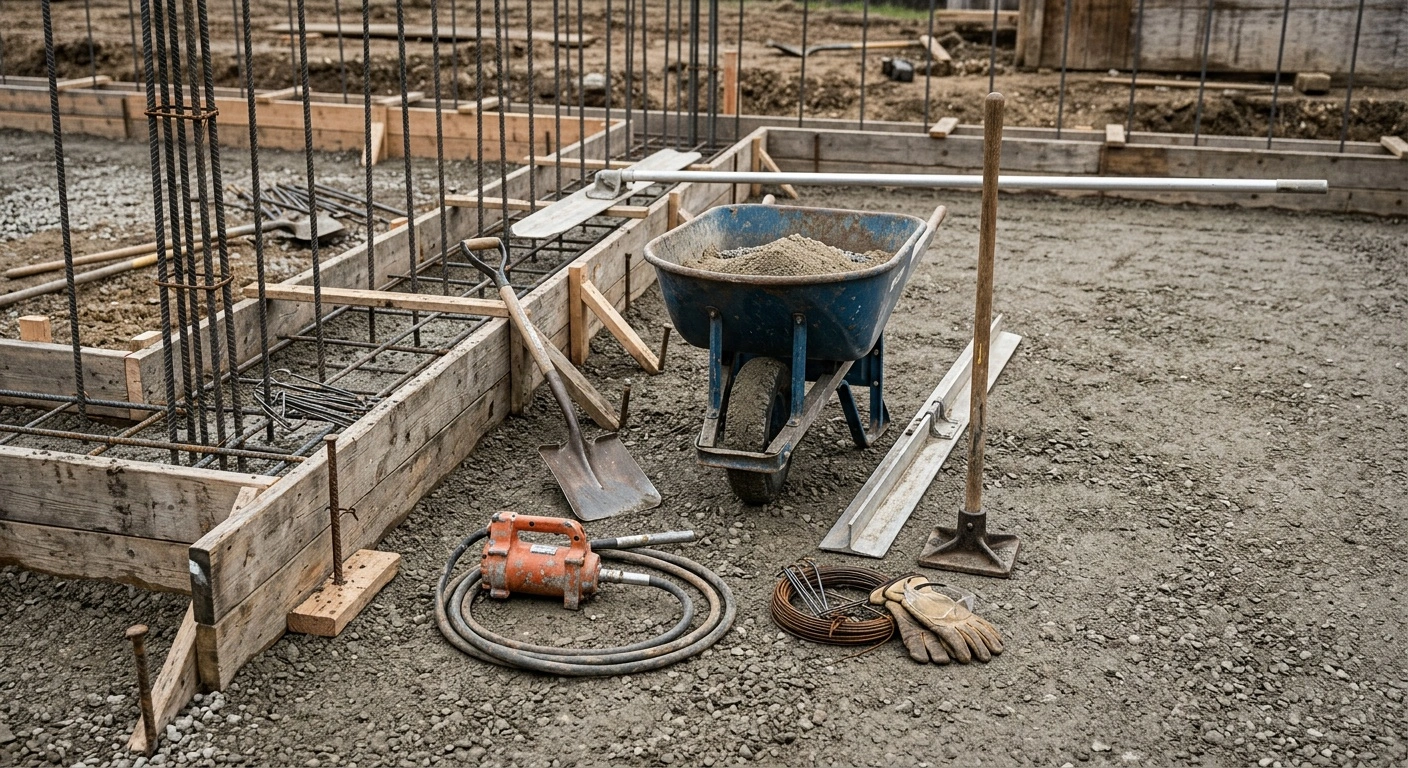
Foundation concrete tools help crews lay out footings, build forms, place reinforcement, and finish concrete accurately. The right kit depends on the foundation type and jobsite conditions. A wall foundation requires different equipment than a small slab or pier footing.
Foundation Concrete Tools for Each Stage of the Job
Concrete work moves fast once the truck arrives. Organize tools by task so the crew can find them without delaying the pour.
Layout and Grade Tools
Accurate layout keeps footings under the planned walls and columns. Start with the site plan, then verify every measurement before excavation.
- Laser level: Establishes footing depth, form height, and finished elevation.
- Builder’s level: Provides reliable grade checks across larger sites.
- Tape measure: Handles offsets, form dimensions, and diagonal measurements.
- Chalk line: Marks straight reference lines on forms and slabs.
- String line and stakes: Define corners, wall lines, and excavation limits.
- Framing square: Checks corners and form alignment.
Measure diagonally between opposing corners to confirm a rectangular layout. Matching diagonal measurements indicate square corners.
Excavation and Base Preparation Tools
Excavators handle most foundation digging, but hand tools still matter. Crews use them to clean corners, remove loose soil, and adjust trench dimensions.
- Round-point shovel: Cuts soil and clears narrow footing trenches.
- Square shovel: Levels gravel and cleans flat excavation surfaces.
- Mattock: Breaks compacted soil and cuts small roots.
- Plate compactor: Consolidates gravel beneath slabs and footings.
- Hand tamper: Compacts tight areas that powered equipment cannot reach.
Do not pour over loose or disturbed soil. Follow the project specifications for bearing conditions, gravel depth, and compaction.
Formwork Tools
Forms must hold their shape under the pressure of wet concrete. Strong bracing matters as much as accurate dimensions.
- Circular saw: Cuts plywood, dimensional lumber, and form stakes.
- Hammer or framing nailer: Assembles forms and bracing.
- Impact driver: Installs screws, ties, and reusable form hardware.
- Clamps: Hold panels in position during assembly.
- Digging bar: Drives stakes and shifts heavy form sections.
- Form release sprayer: Applies release agent in a thin, even coat.
Check form width, elevation, plumb, and bracing before the pour. Also seal gaps that could leak cement paste.
Reinforcement Tools
Rebar strengthens concrete against tensile forces. The structural drawings specify bar size, spacing, lap length, and concrete cover.
- Rebar cutter: Produces clean cuts faster than a general-purpose saw.
- Rebar bender: Forms hooks, corners, and specified bends.
- Rebar tie tool: Secures intersections with tie wire.
- Bolster chairs and spacers: Hold steel at the required height and cover.
- Angle grinder: Handles occasional cuts with the correct abrasive wheel.
Support reinforcement before concrete placement begins. Never pull welded wire mesh upward during the pour as a substitute for proper chairs.
Tools for Placing and Consolidating Concrete
Concrete must fill the forms without leaving voids or displacing reinforcement. Plan the discharge route before the first load arrives.
- Concrete chute: Directs concrete from the truck into accessible forms.
- Concrete pump: Moves material to deep, high, or restricted locations.
- Come-along: Pulls concrete into position without excessive shoveling.
- Concrete rake: Spreads material while reducing disruption to reinforcement.
- Internal vibrator: Consolidates concrete around steel and inside wall forms.
- Shovel: Places small amounts in corners and tight sections.
Insert the vibrator vertically at regular intervals and withdraw it slowly. Avoid prolonged vibration, which can separate the concrete mixture.
Finishing and Curing Equipment
Footings often need only a rough strike-off. Slabs and exposed foundation surfaces require more finishing steps.
- Straightedge or screed: Removes excess concrete and establishes grade.
- Bull float: Flattens ridges after screeding and pushes down coarse aggregate.
- Magnesium float: Opens the surface and removes small imperfections.
- Edger: Rounds exposed slab edges to reduce chipping.
- Groover: Forms control joints in slabs where the plans require them.
- Steel trowel: Produces a dense, smooth surface after bleed water disappears.
- Curing sprayer: Applies curing compound at the specified coverage rate.
Do not finish bleed water back into the surface. Wait until it evaporates, then complete the required finish.
Curing helps concrete retain moisture during early strength development. Use wet coverings, plastic sheeting, or an approved curing compound.
Testing, Cleaning, and Safety Gear
Quality checks can identify placement problems while the concrete remains workable. On specified projects, trained technicians should conduct slump, air, temperature, and strength tests.
- Slump cone set: Measures concrete consistency in the field.
- Concrete thermometer: Records material temperature during placement.
- Cylinder molds: Create samples for compressive strength testing.
- Pressure washer: Removes fresh residue from reusable equipment.
- Stiff brushes: Clean hand tools before concrete hardens.
Wet concrete can cause serious chemical burns. Workers need alkali-resistant gloves, rubber boots, eye protection, and suitable work clothing.
Silica dust also requires control during cutting or grinding. Use wet-cutting methods, dust extraction, and the respiratory protection specified by the safety plan.
How to Choose Foundation Concrete Tools
Select foundation concrete tools according to pour size, access, form height, and finish requirements. Renting often makes sense for pumps, vibrators, compactors, and powered rebar equipment.
Inspect every tool before placement day. Test powered equipment, charge batteries, confirm fuel supplies, and keep backup hand tools nearby.
Clean tools as soon as each task ends. Fresh concrete comes off quickly, while hardened material can damage surfaces and moving parts.
A Practical Tool Plan Prevents Pour Delays
A reliable setup covers layout, excavation, forms, reinforcement, placement, finishing, curing, and safety. Assign tools to specific crew members and stage them near the work area.
Well-maintained foundation concrete tools improve accuracy and keep the crew moving during time-sensitive pours. Confirm the project drawings and concrete specifications before choosing the final kit.