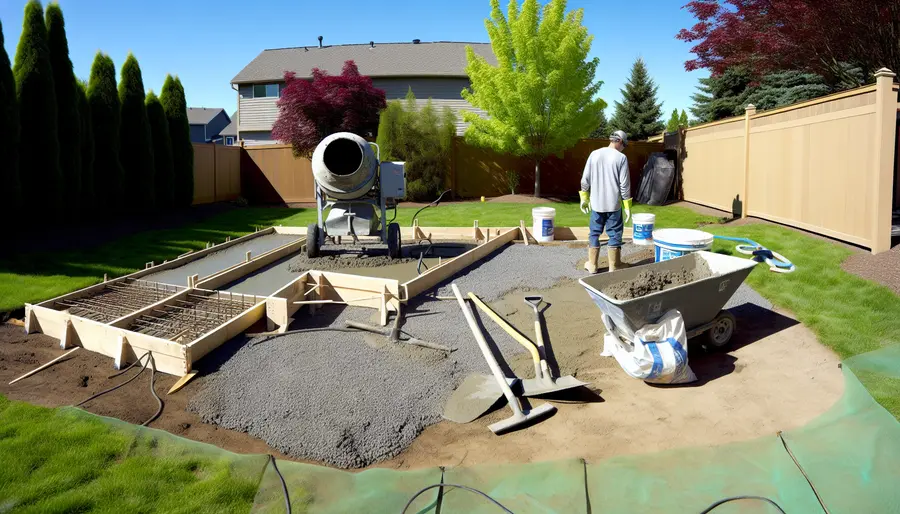
Starting a backyard concrete slab project? Whether you’re a professional contractor or an experienced DIYer, having a concrete slab tools list is crucial. The success of your project relies on your skills and the right tools to use effectively. This guide explores essential tools, mix recommendations, curing strategies, and pro tips to ensure your concrete slab project is a success.
Comprehensive Concrete Slab Tools List
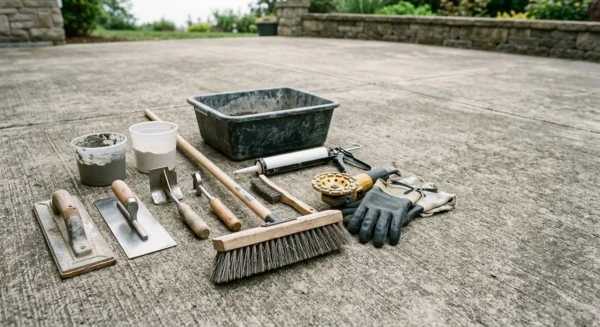
A well-prepared concrete slab tools list ensures your project runs smoothly from start to finish. Essential tools for any backyard concrete slab project include:
- Concrete Mixer: This tool is crucial for achieving a well-blended concrete mix. For small to medium-sized projects, a portable mixer is ideal.
- Wheelbarrows: These are needed for transporting mixed concrete from the mixer to the project site.
- Shovels and Hoes: Needed for manual mixing and placing concrete into forms. Fiberglass handles are durable.
- Screed: A flat board or specialized tool for leveling freshly poured concrete across forms.
- Magnesium Bull Float: Smooths and flattens concrete after screeding, removing surface imperfections.
- Edger and Groover: Creates clean edges and control joints to prevent cracking.
- Concrete Finishing Trowel: Provides a smooth finish and comes in various sizes for different tasks.
- Safety Gear: Gloves, safety goggles, and boots protect against the harshness of concrete.
- Curing Blankets: Essential for maintaining moisture during the curing process, especially in varying climates.
- Rebar and Rebar Bending Tools: Necessary for reinforcing larger slabs to provide additional strength.
Concrete Placement and Finishing Tips
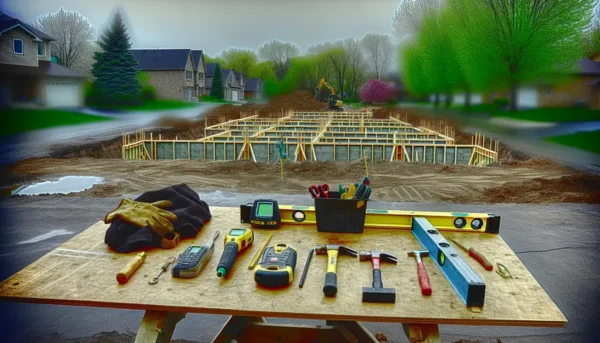
Placing and finishing concrete effectively requires precision and adherence to best practices. A solid concrete slab tools list lays the groundwork. Ensure the site is properly graded and stable. A 4-inch gravel sub-base is typically recommended for optimal drainage. Use a transit level to check elevations and ensure evenness.
Mix the concrete to a slump level between 4 and 5 inches to balance workability and strength, achieving approximately 3000 PSI, which suits most backyard slabs. Additives like plasticizers can improve workability without adding extra water.
When placing the concrete, level it with a screed by moving it across the surface with a sawing motion. Follow up immediately with bull floating to bring the cream to the surface for a smooth finish. Control joints should be spaced 8 to 12 feet apart to minimize cracking.
Effective Reinforcement Techniques
For larger backyard slabs, reinforcement helps prevent cracks from shrinkage and temperature changes. Rebar or wire mesh in your concrete slab tools list is essential. Arrange rebar in a grid pattern, using chairs to keep it properly positioned within the slab. For wire mesh, pull it upwards into the slab before the concrete sets for effective support.
Consider fiber reinforcement for added strength, which can significantly reduce surface cracking.
Curing Strategies and Safety Precautions
Proper curing ensures the desired strength and durability of your concrete slab. Using curing blankets or moist curing methods like water sprays can prevent water evaporation. Begin curing as soon as the surface is firm enough to handle water, usually within a few hours after finishing.
Weather conditions affect curing times. In hot climates, more frequent water sprays can help reduce evaporation. In colder areas, curing blankets maintain warmth, preventing freezing during the initial setting period.
Safety is important in concrete projects. Always wear protective gear and use safe lifting techniques, especially with heavy machinery components or rebar. Keep a First Aid kit on-site and make sure everyone knows emergency procedures.
Avoiding Mistakes in Concrete Slab Projects
A successful project avoids common pitfalls. Neglecting proper subsurface preparation can lead to an unstable foundation. Incomplete mixing or improper water content can result in weak slabs or surface cracking.
Finishing too early poses issues as premature troweling can seal the surface and trap water, leading to weak spots. It’s crucial to time each project phase carefully, paying attention to temperature and humidity for successful results.
With a comprehensive concrete slab tools list and a thorough approach, your backyard slab project will stand the test of time, showcasing quality craftsmanship and structural integrity.