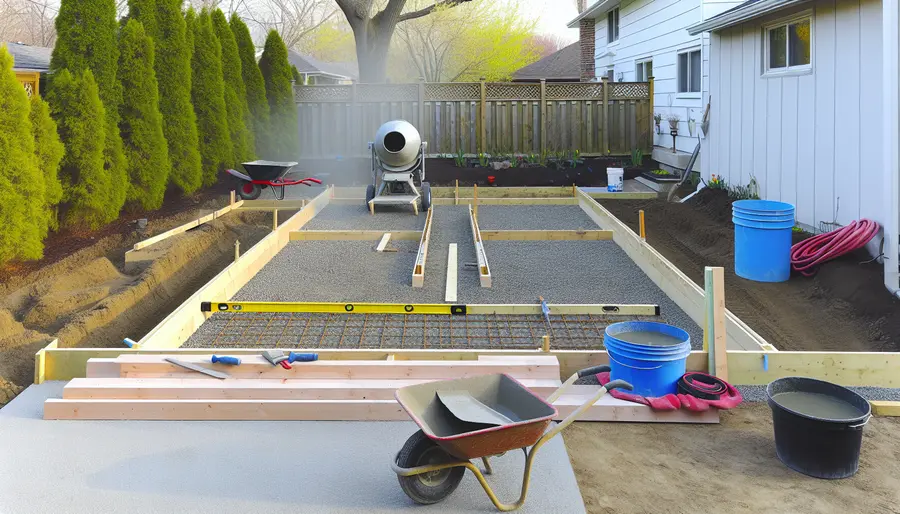
Embarking on a concrete patio installation project requires a well-prepared “concrete patio tools list” to guarantee a successful setup. The right tools ensure a professional finish and efficiency on-site. This guide details essential equipment for creating a high-quality patio.
Mixing and Pouring Tools for Concrete Patios
The core of any concrete patio project lies in the mixing and pouring process, as it determines the durability and appearance of the final product. A reliable concrete mixer is vital for a dependable concrete patio tools list. For minor tasks, a portable electric mixer is suitable. Larger commercial projects may require a truck-mounted mixer. Aim for a mix with a PSI rating of at least 3,000 for patios to handle household traffic and weather conditions.
Transporting concrete efficiently requires a wheelbarrow; choose one with a robust steel frame and inflated rubber tires for uneven terrain. To check consistency, a slump cone set is crucial. For patios, aim for a 4 to 5-inch slump to ensure workability without sacrificing strength.
Tools for a Smooth Surface Finish
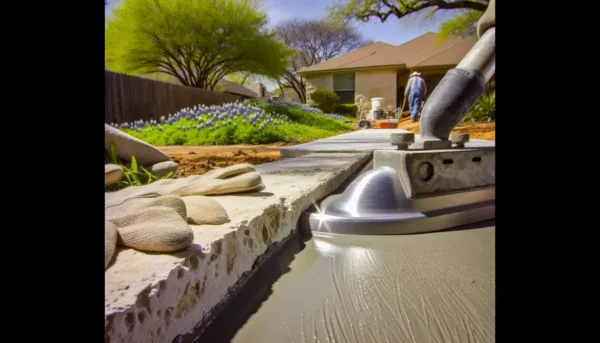
Finishing tools are critical on the concrete patio tools list as they affect surface quality and visual appeal. Start with a bull float to bring smoother material to the surface, establishing a base for a professional finish. A magnesium hand float further refines smaller areas and edges.
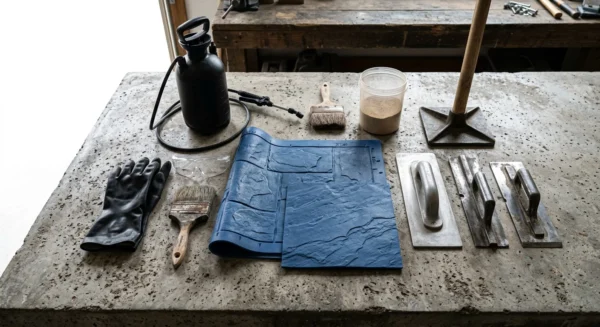
Use an edger to round off slab edges, minimizing the risk of chipping. Consider a broom for a non-slip texture or roller pattern stamps for decorative finishes. Remember to pack knee pads, as finishing work often involves kneeling.
Reinforcement Tools and Materials
Reinforcement is essential, especially in areas prone to freeze-thaw cycles. Include reinforcing mesh or rebar in your list. With rebar, a bender and cutter will be necessary. Use wire mesh rollers to lay mesh precisely across extensive areas, ensuring full coverage.
Proper jointing helps manage cracking caused by concrete expansion and contraction. A groover creates effective control joints. For typical patios, space these joints about eight feet apart to control directional cracking.
Tools for Curing and Protection
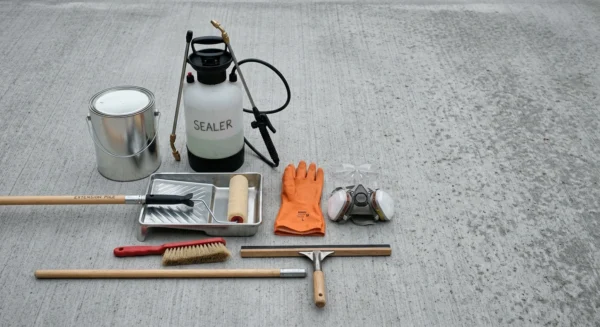
Curing significantly impacts the longevity of your patio. Include a curing compound applicator sprayer on your list for maintaining moisture during curing. This gradual evaporation is vital for strength development. In warm climates, polyethylene sheeting can help minimize moisture loss and temperature-related issues.
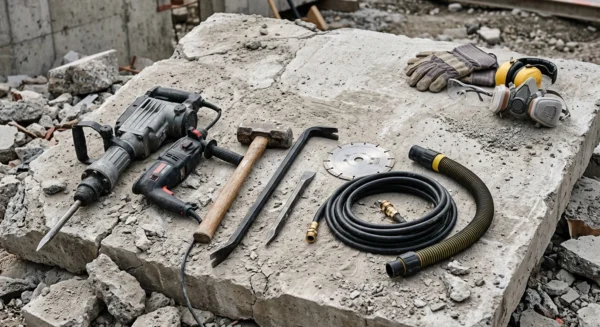
Use safety barriers or cones to protect the curing site from damage. A safety toolbox with gloves, goggles, and a dust mask is also essential to guard against irritants and injuries during curing and finishing tasks.
Safety, Code Compliance, and Avoiding Pitfalls
Safety and compliance with local codes are crucial for a successful concrete patio installation. Always adhere to local regulations, including setback distances and coverage ratios. Ensure precise layout adherence by including a level and measuring tapes in your tools list.
Wear safety equipment on site, like hard hats and steel-toed boots, to prevent injuries. Consider load-bearing capacities if the patio will support heavy objects and consult structural engineers to avoid failures.
-
Common Mistakes and Prevention Strategies
- A minimum seven-day curing time is necessary for optimal results.
- Proper subgrade preparation is vital: compact the soil and use a gravel base to prevent shifting and cracking.
- Adjust timelines and water content according to weather conditions, as concrete sets faster in hot weather.
Incorporate these tools and strategies for enhanced quality and durability in your concrete patio project. From specific tools mentioned in the concrete patio tools list to proper curing methods and safety practices, being well-prepared ensures efficient operations and excellent outcomes.