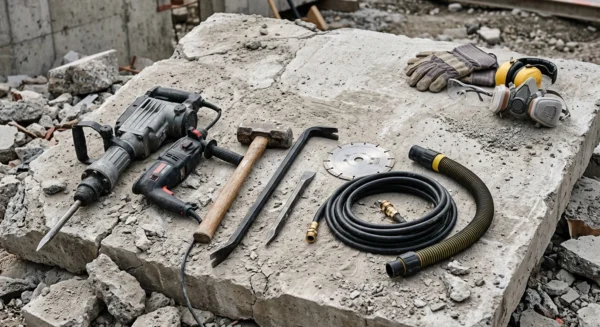
In the field of concrete construction, using the right concrete cutting tools can greatly improve the efficiency, safety, and quality of every project. The work on residential driveways, commercial pavements, or industrial floors requires precise concrete cutting to ensure each phase aligns with design specifications and structural needs. Here are the essential tools and equipment necessary for concrete cutting jobs.
Essential Concrete Cutting Tools
Tools for concrete cutting include a range of machinery and hand-operated devices suited for various project needs. Knowing what each of these tools offers can streamline operations and help prevent costly errors.
1. Concrete Saws: Concrete saws are vital. These powerful machines, available in both walk-behind and handheld models, deliver clean and precise cuts. For larger projects, a walk-behind saw with a diamond blade is preferred for its durability and ability to cut thicker slabs. Handheld models are ideal for smaller, detailed tasks requiring flexibility and control.
2. Diamond Blades: Choosing the right blade is crucial. Diamond blades cut through tough concrete with ease. When selecting a blade, consider aggregate hardness and steel reinforcement presence. Segmented blades suit dry cutting of hard materials, while continuous rim blades perform well in wet conditions, enhancing blade life and reducing dust.
3. Core Drills: Core drills are made for creating precise circular openings in concrete, ideal for utility installations. With adjustable speed and pressure settings, these drills can accommodate different concrete densities and reinforcement levels, optimizing performance and hole quality.
4. Reciprocating Saws: Used frequently in demolition, reciprocating saws with carbide-tipped blades efficiently cut through concrete, especially in hard-to-reach places. Although less precise than saws or drills, they offer flexibility when detailed precision is not as crucial.
5. Angle Grinders: These tools are excellent for small-scale cutting and finishing tasks. Equipped with a diamond blade, an angle grinder can cut, grind, and polish concrete surfaces, giving edges and corners a smooth, clean finish.
Safety Considerations with Concrete Cutting Tools
Using concrete cutting tools requires strict adherence to safety protocols since concrete dust and other debris pose significant health risks. Here are important safety practices:
- Wear personal protective equipment, including safety goggles, dust masks, gloves, and ear protection.
- Use wet cutting techniques to minimize dust, extending blade life and improving visibility and safety for operators.
- Maintain all equipment and ensure it is operated by trained personnel. Regular inspections can prevent equipment failure and accidents.
- Develop site-specific safety protocols, taking into account environmental conditions like wind direction and ventilation in enclosed spaces.
Real-World Cutting Strategies
Practical applications often require specific approaches to concrete cutting. In regions with varied climates, like the Midwest, cutting must consider expansion and contraction due to temperature variations. Employing control joints allows for these movements, reducing the risk of cracks.
Concrete mix design also plays a role. Depending on required strength (measured in PSI), adjustments in water-cement ratio or the addition of materials can alter cutting properties. A mix with higher PSI or added reinforcement may need more powerful tools or specialized blades.
Common Mistakes and Best Practices
Even experienced professionals face challenges in concrete cutting operations. Here are a few common pitfalls and strategies to avoid them:
- Time cuts correctly. For control joints, cutting should take place shortly after curing begins but before the concrete completely hardens.
- Ensure proper blade installation. Incorrectly installed blades can cause unintended cuts or equipment damage. Verify blade compatibility with material and ensure proper mounting.
- Detect reinforcement adequately to prevent blade binding or excessive wear. Use detection technology to identify embedded reinforcements before cutting.
On-Site Optimization for Concrete Cutting Tools
Maximize productivity by considering on-site conditions and planning cutting sequences strategically. Factors like power supply availability, ambient climate, and construction activity scheduling can impact efficiency. Timing cuts during cooler parts of the day prevents equipment overheating and improves operator comfort.
Compliance with local building codes ensures that any modifications to structural components through cutting meet legal standards, maintaining safety and project integrity.
Understanding the dynamics between appropriate concrete cutting tools, techniques, and safety measures helps transform cutting tasks into efficient, quality-driven operations. These tools, when used properly, not only enhance performance but also contribute to longevity and cost-effectiveness in construction projects of any scale.