Gathering the right concrete repair tools is crucial before starting any concrete repair project. A professional finish and long-lasting results depend greatly on having the proper tools and equipment. This guide details the essential tools for those planning residential, commercial, or industrial concrete repairs.
Key Concrete Repair Tools for Every Project
A well-prepared toolkit forms the foundation of a successful repair job. Essential tools include equipment for surface preparation, mixing, and finishing, each playing a significant role in the process.
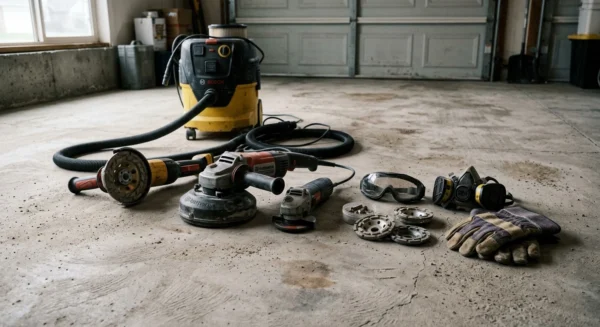
Surface Preparation Equipment: Start with tools like pressure washers or grinders for preparing the concrete surface. For example, a diamond grinder can level uneven surfaces and remove contaminants. This step becomes especially important in areas with heavy weathering, such as the Midwest during winter.
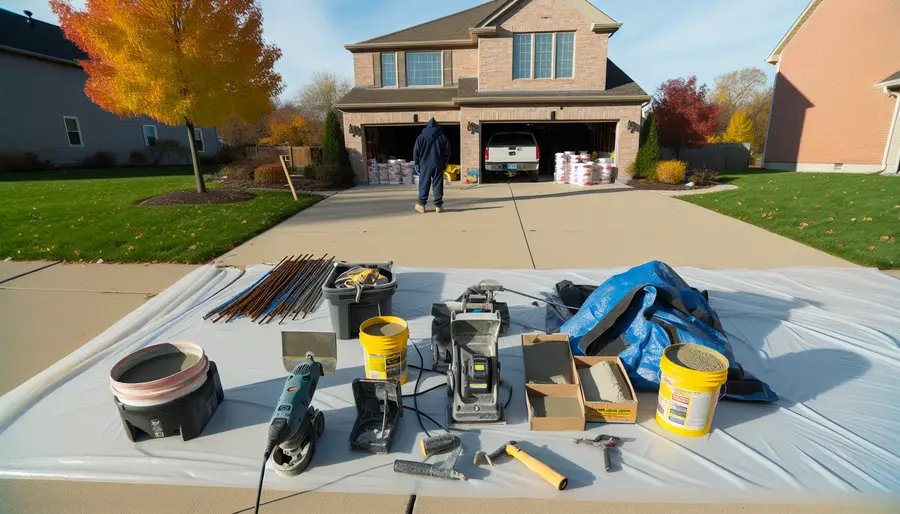
Mixing Tools: A durable mixer is vital for achieving the right consistency, particularly when working with specific PSI-rated mixes like a 4000 PSI mix for heavy-duty repairs. Depending on the project’s scale, you might need a portable or larger, towable mixer for bigger jobs.
Finishing Implements: Trowels, floats, and edgers are necessary for finishing. Hand tools work for small areas, while larger areas may require a bull float for uniform finishing. Different float types help achieve various textures to suit site conditions, which is important for aesthetic repairs or weather-adapted finishes.
Additional Materials and Reinforcements
Besides concrete repair tools, additional materials are required. Patch compounds and bonding agents enhance the durability, effectiveness, and finish of the repaired concrete.
Patching Compounds: It is important to choose a compound that matches the existing concrete’s properties. Epoxy patches are effective for structural repairs, while polymer-modified compounds suit non-structural patching.
Bonding Agents: Proper adhesion is critical, and applying a suitable bonding agent ensures this. Understanding substrate conditions is helpful. For example, a latex bonding agent improves flexibility and suits both indoor and outdoor applications.
Reinforcement Options: Incorporate reinforcements like steel mesh and rebar to create robust repairs in heavy-load regions, ensuring compliance with local building codes, especially in regulated areas like California.
Curing Strategies
Curing the repaired concrete effectively prevents premature cracking and enhances strength. The chosen method must reflect the project’s specific needs and environmental factors.
In hot climates, use moisture-retentive covers or evaporation retardants to slow curing and avoid cracks. During colder months, insulated blankets might be more appropriate to ensure the concrete reaches the necessary strength without freezing.
Proper curing is crucial and is often overlooked by beginners. Adhering to industry standards on curing durations, typically around seven days for most mixes, significantly contributes to long-term quality.
Concrete Repair Success Tips
Understanding the nuances of concrete repair contributes to successful project outcomes.
- Inspect tools regularly for wear and tear to maintain performance. For example, replacing worn blades on a grinder ensures precise surface preparation.
- Adjust the water-to-cement ratio carefully to prevent future spalling, especially in freeze-thaw cycle-prone areas.
- Familiarize yourself with additives that enhance performance and efficiency. Accelerators are useful when working under tight deadlines or in cold conditions.
- Always prioritize safety by wearing appropriate PPE, especially during mixing and grinding, to avoid respiratory issues and ensure personal safety.
By considering these insights and equipping your project with the necessary concrete repair tools, you improve the likelihood of achieving a resilient, high-quality finish. This preparation leads to functional and long-lasting repairs, securing professional respect and client satisfaction, vital components of success in the construction industry.